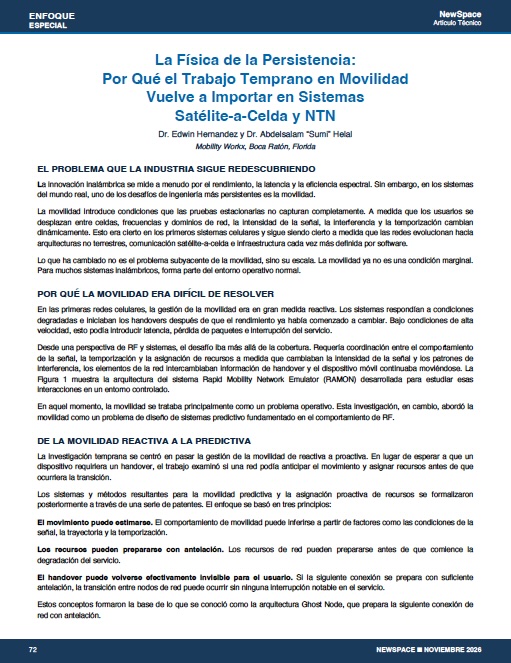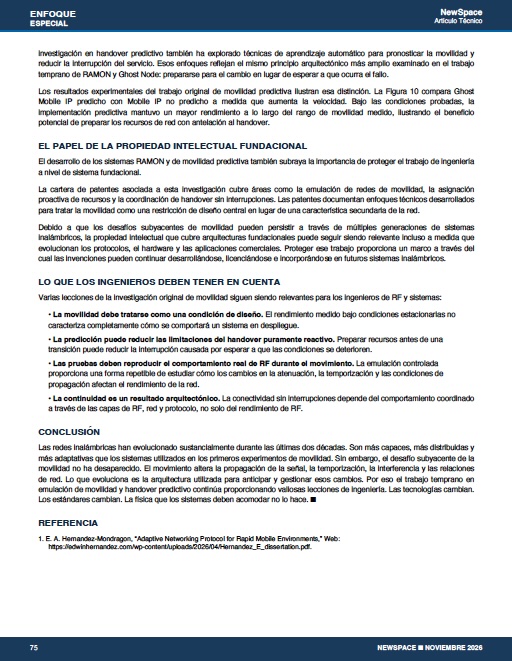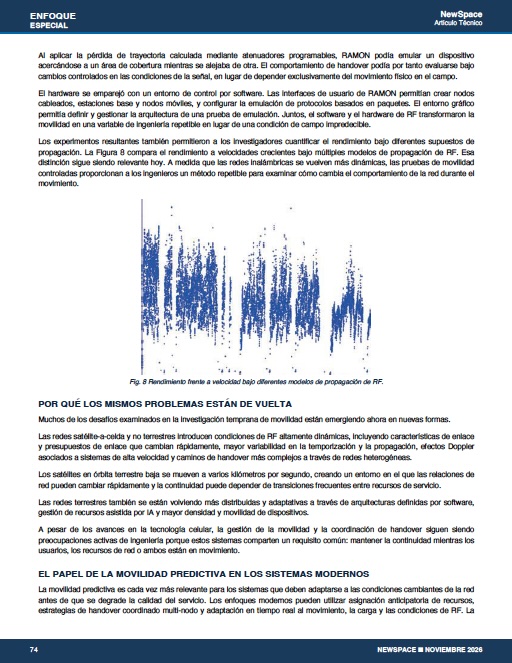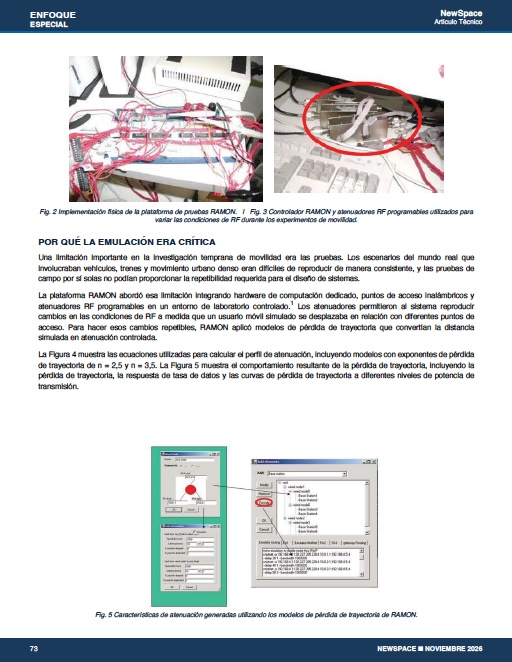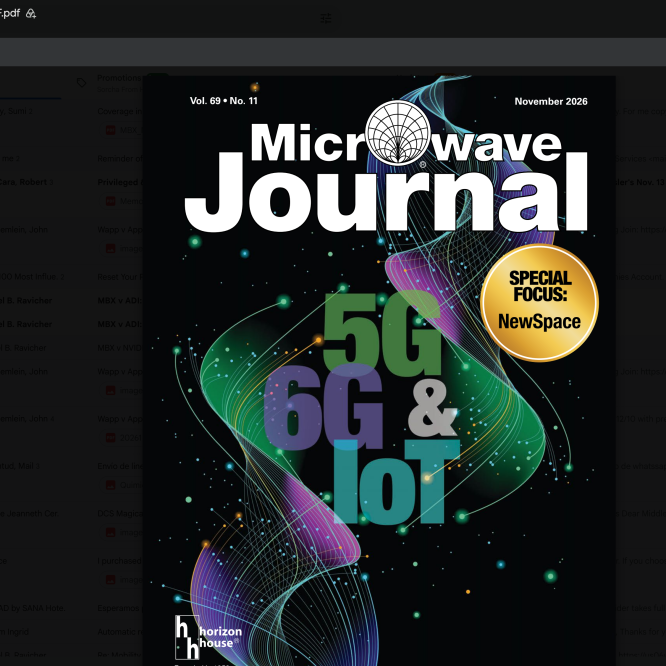
In November 2026, Microwave Journal published a technical feature that revisits a problem the wireless industry has been solving—and rediscovering—for more than two decades: mobility.
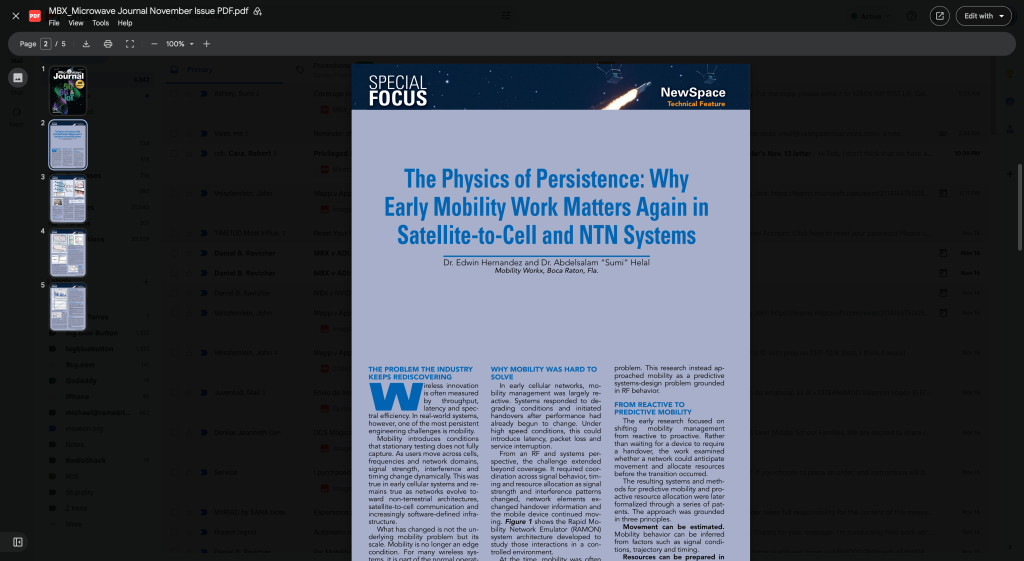
The article, “The Physics of Persistence: Why Early Mobility Work Matters Again in Satellite-to-Cell and NTN Systems,”co-authored with my long-time collaborator and co-founder of Mobility Workx, Dr. Abdelsalam “Sumi” Helal, examines why the fundamental challenges of mobility have not disappeared even as networks have grown more capable, more distributed, and more software-defined. As satellite-to-cell and non-terrestrial networks (NTN) move from experimental to operational, the same physics that complicated early cellular handovers—rapidly changing signal conditions, timing, interference, and the need for continuity—are reappearing at a new scale and velocity.
What has changed is not the underlying problem. What has changed is its importance. Mobility is no longer an edge case. For many systems, it is now part of the normal operating environment.
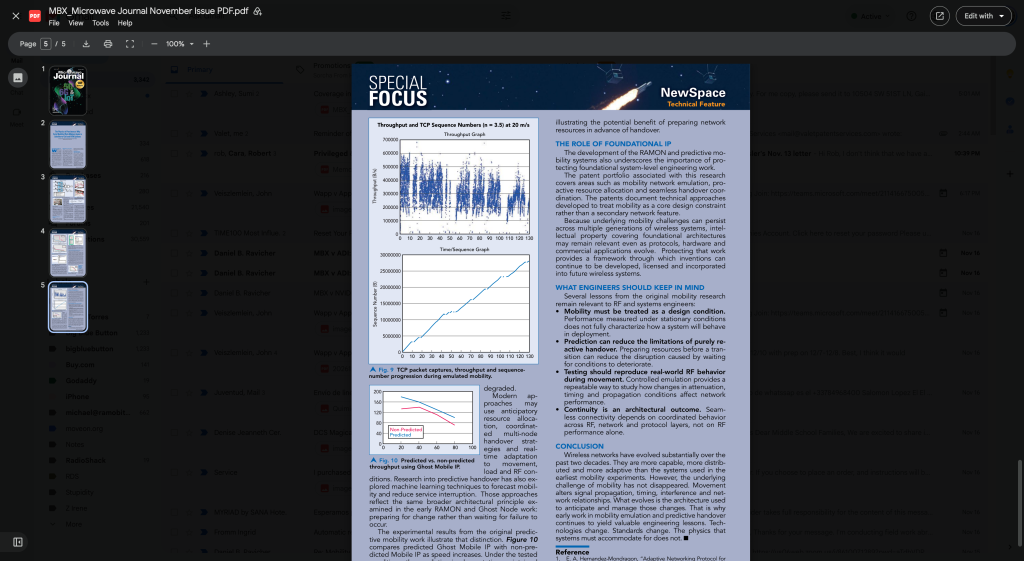
The piece draws on research we began years earlier with the Rapid Mobility Network Emulator (RAMON) and the Ghost Node architecture. That work treated mobility as a predictive systems-design problem rather than a purely reactive operational one. Instead of waiting for conditions to degrade before initiating a handover, the approach asked whether a network could estimate movement, prepare resources in advance, and make the transition effectively invisible to the user. The resulting methods were later formalized in a series of patents covering mobility network emulation, proactive resource allocation, and seamless handover coordination.
The Microwave Journal article places that earlier work in today’s context. Low Earth orbit satellites move at several kilometers per second. Link budgets and timing change quickly. Handover paths become more complex across heterogeneous terrestrial and non-terrestrial domains. At the same time, terrestrial networks are becoming more distributed and adaptive through software-defined architectures and AI-assisted resource management. In both environments, the core requirement remains the same: maintaining continuity while users, network resources, or both are in motion.
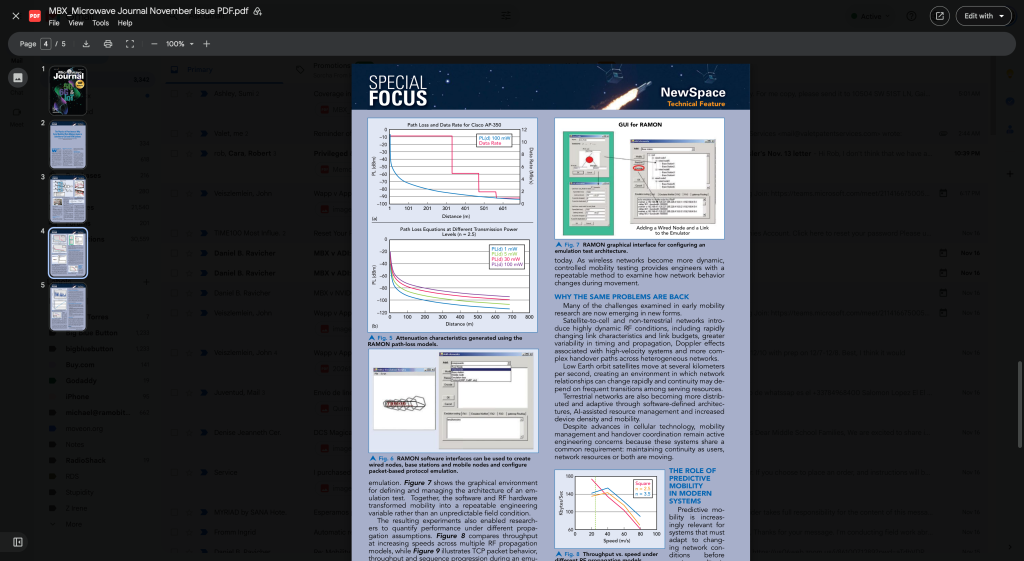
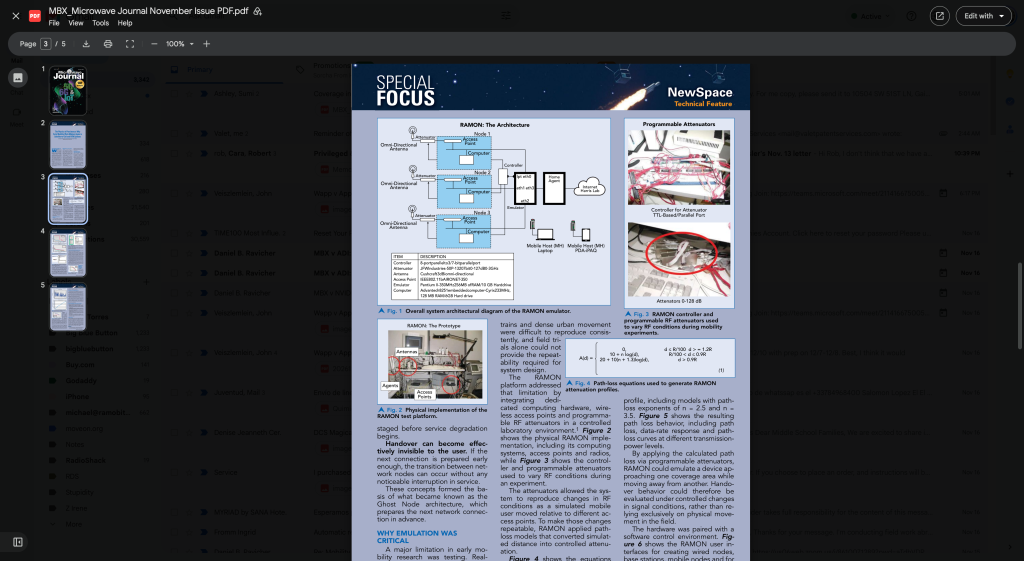
The feature also discusses why controlled emulation remains valuable. Real-world mobility is difficult to reproduce consistently in the field. RAMON addressed that limitation by combining dedicated computing hardware, wireless access points, and programmable RF attenuators so that path-loss models and handover behavior could be studied under repeatable conditions. Those lessons still apply as engineers evaluate performance under the highly dynamic RF conditions of NTN and satellite-to-cell systems.
I am sharing the article here because the underlying engineering questions have not gone away. Technologies change. Standards change. The physics that systems must accommodate does not, feel free to download my dissertation in PDF.
The full technical feature appears in the November 2026 issue of Microwave Journal as part of the special focus on NewSpace.

English Version
Spanish Translation