
This is a summary of my PhD dissertation and research from 2002 derived from this presentation. These are the foundational aspects of the US Patents: 7231330, 7697508, and 8213417. Now, these patents are foundational to 4G, 5G and 6G systems.
RAMON: Adaptive Networking for High-Speed Mobility
The challenge of maintaining seamless connectivity in Rapidly Mobile Environments, such as high-speed trains, requires moving beyond traditional networking solutions. RAMON (Rapidly Mobile Network Emulator) was developed as an emulation testbed to address the limitations of existing protocols and simulation tools.
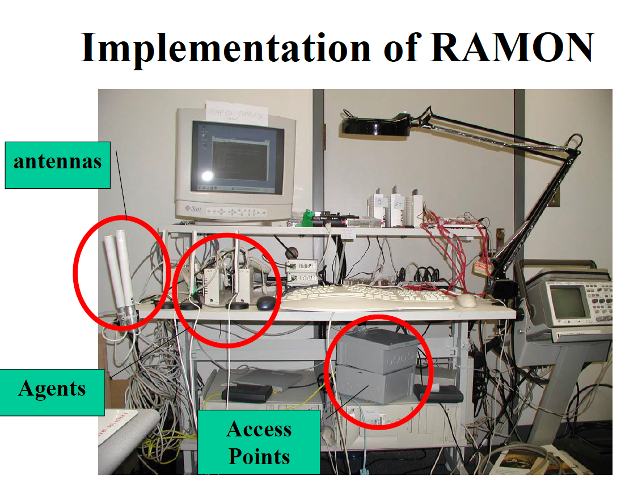
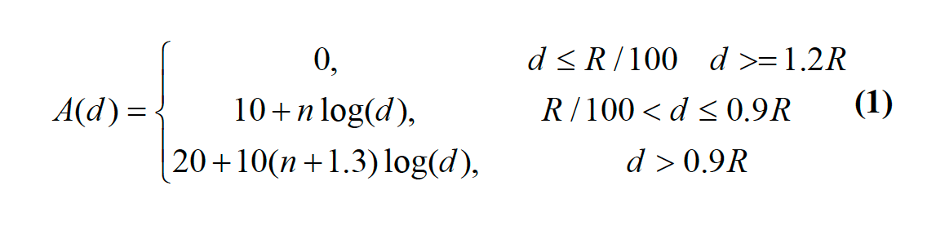
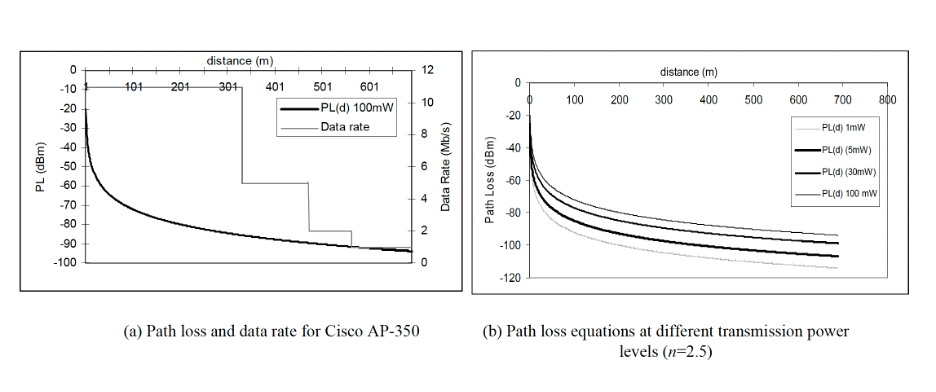
The system consisted in using a mathematical model for RF signal propagation in space, for example using LOG-distance attenuation model.
A) The Problem: Mobile-IP at High Speeds
Traditional Mobile-IP protocols struggle when hosts move at high velocities. The primary issues identified in the sources include:
- Handoff Latency: Network delays and authentication times during handoffs often render packet-forwarding models unusable for fast-moving vehicles.
- High Overhead: Handoff overhead in standard Mobile-IP can be greater than or equal to registration overhead, often confusing TCP and dropping throughput.
- Simulation Gaps: Standard simulators like ns-2 often use simplified propagation models and hard-coded bandwidths that do not accurately reflect real-world hardware performance.
- Reactive Nature: Existing protocols are reactive, meaning they only begin the handoff process after a connection is already weakening, leading to significant packet loss at speeds exceeding 20 m/s.
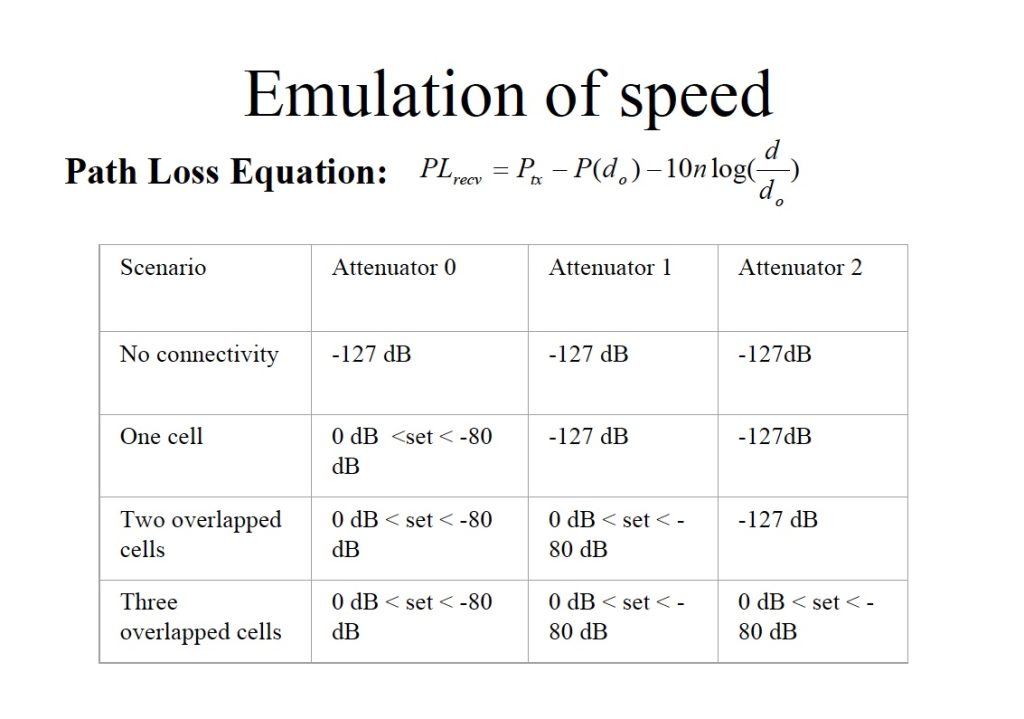
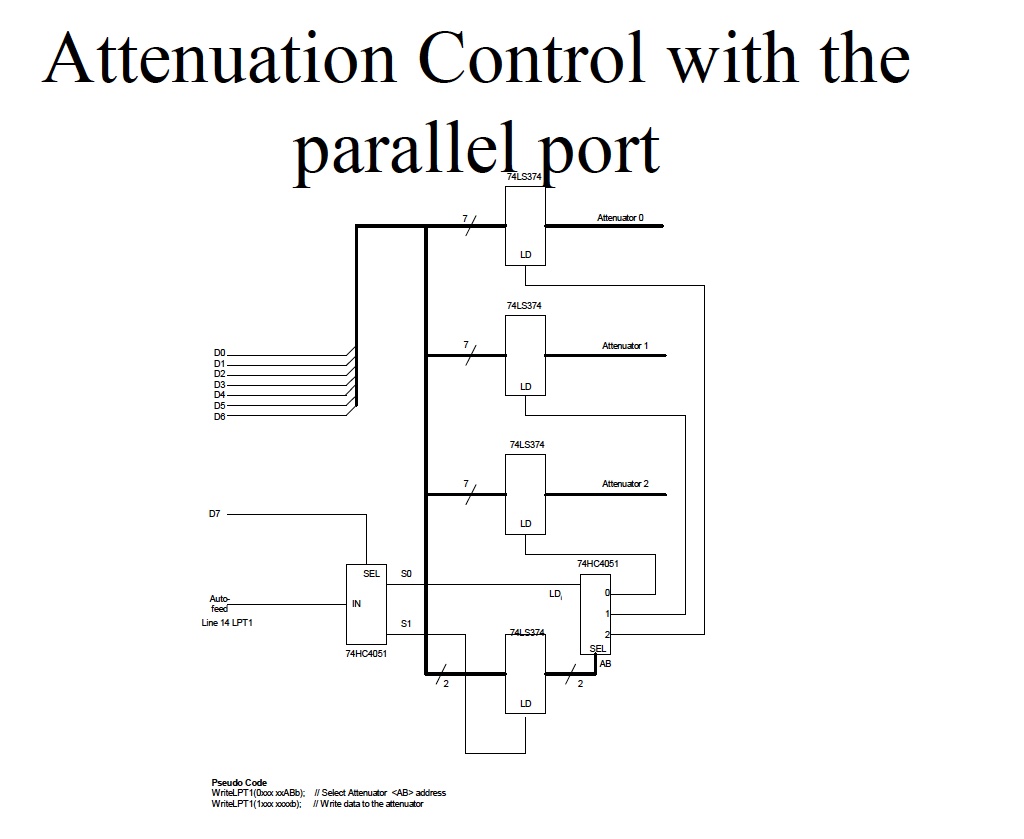
As shown herein, the path loss equation sets different modes, one cell, two overlapped cells, three overlapped cells, and many more. The controller is simply a parallel port multiplexer that sets the attenuation value to each attenuator as shown here:
B) How RAMON Works: The Software and Network Creation
RAMON utilizes a network emulation approach that combines real hardware with programmable software to mimic realistic mobility conditions.
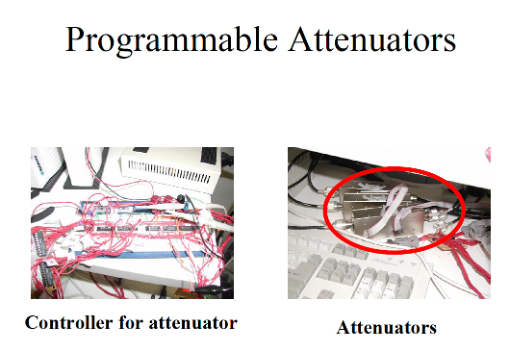
First, propagation models can be modified with attenuators using multiple paths and directions for Radio Frequency modeling.
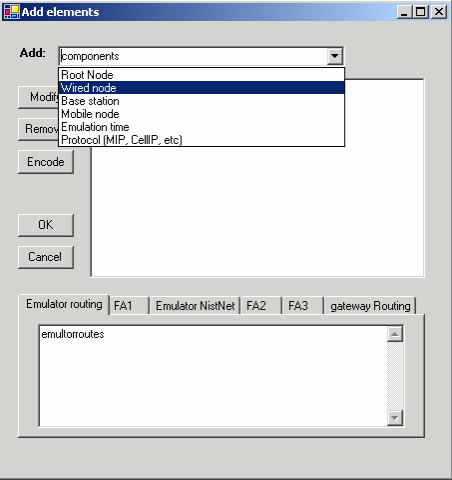
The Software Architecture:
- GUI-Driven Design: RAMON features a Graphical User Interface built with C# and .NET, allowing users to visually construct network topologies.
- NS Script Integration: It can parse and emulate modified ns scripts, converting simulation parameters into real-world emulation code.
- NistNET Integration: For the wired portion of the network, RAMON uses NistNET to emulate bandwidth constraints, latency, and packet loss.
You can then emulate a network of base stations interconnected as follows:
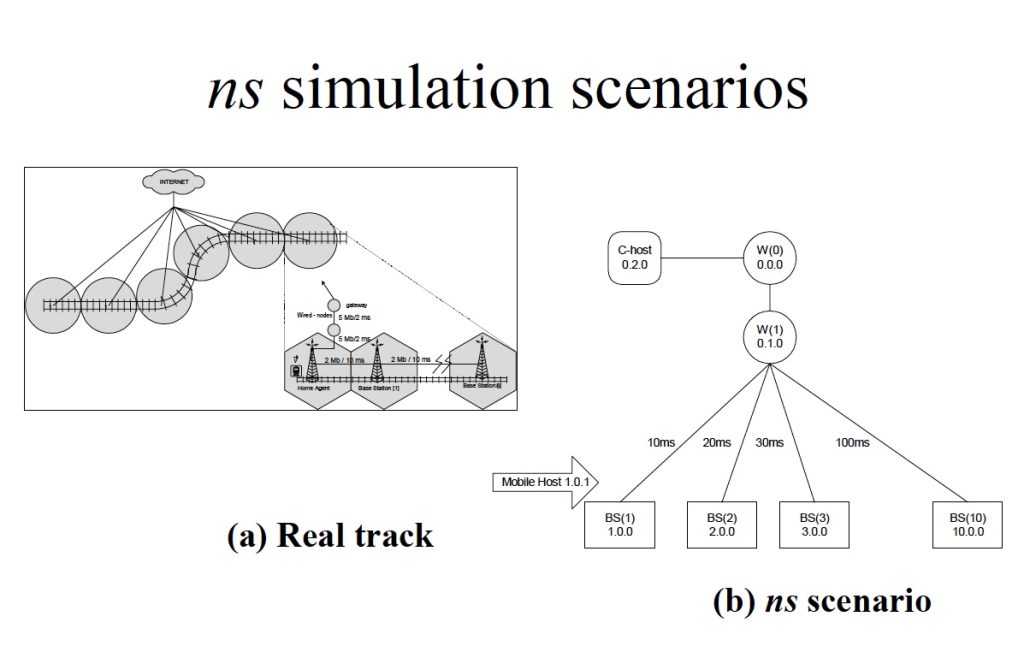
C) Mobility Protocol and Handover: The “Ghost” Entities
To solve the problems of reactive handoffs, RAMON introduces Ghost Mobile-IP, which utilizes predictive rather than reactive mechanisms.
The Mobility Protocol Description: The protocol uses “Ghost” entities—virtual repeaters that act on behalf of the mobile host and foreign agents before they are physically in range.
- Ghost Mobile-Node (g-MN): This entity predicts the mobile node’s trajectory and sends preemptive registration requests to the next Foreign Agent (FA). It essentially allocates resources in advance so the tunnel is ready before the mobile host arrives.
- Ghost Foreign Agent (g-FA): This entity allows neighboring FAs to advertise the presence of an upcoming FA, effectively increasing the “range” of the signal and preparing the mobile host for handoff.
Predictive Handover with Kalman Filters: The core of this handover mechanism is the Kalman Filter or Neural Networks (e.g. LSTM), which tracks the location and speed of the mobile host.
- By estimating the state (position and velocity) of the vehicle, the system can anticipate movement and initiate the handoff process preemptively.
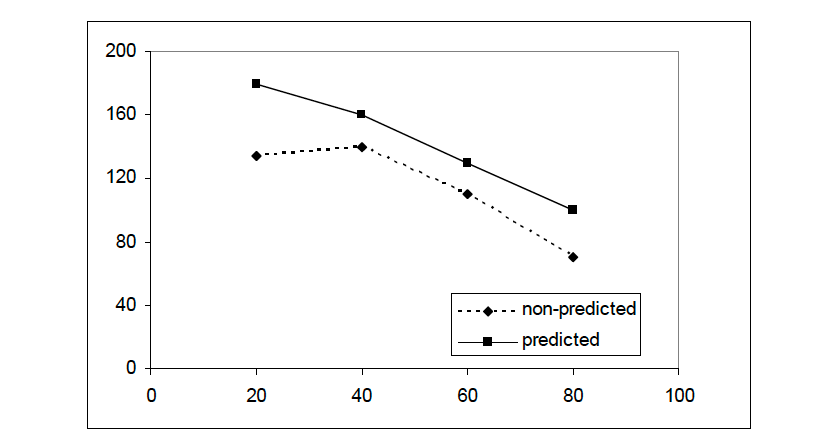
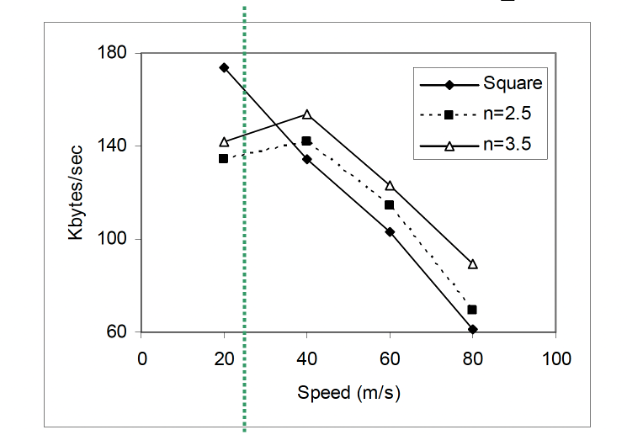
- Results: In high-speed tests at 80 m/s, this predictive approach increased maximum throughput from 60 Kbytes/sec to 90 Kbytes/sec, a 1.5x improvement over standard reactive Mobile-IP.
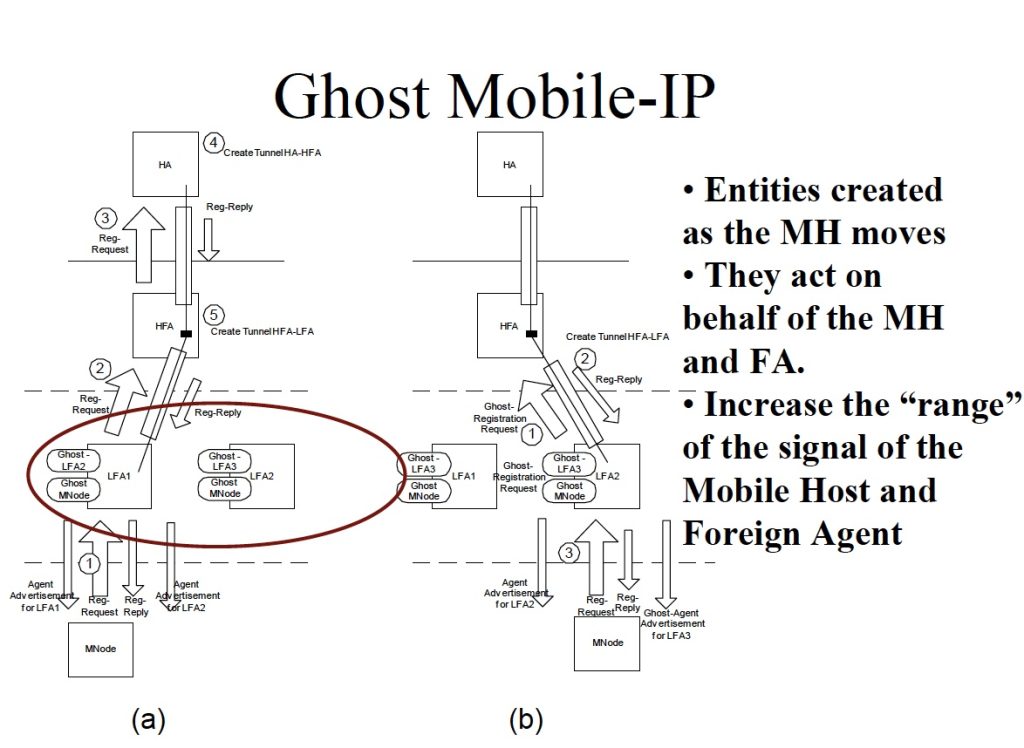
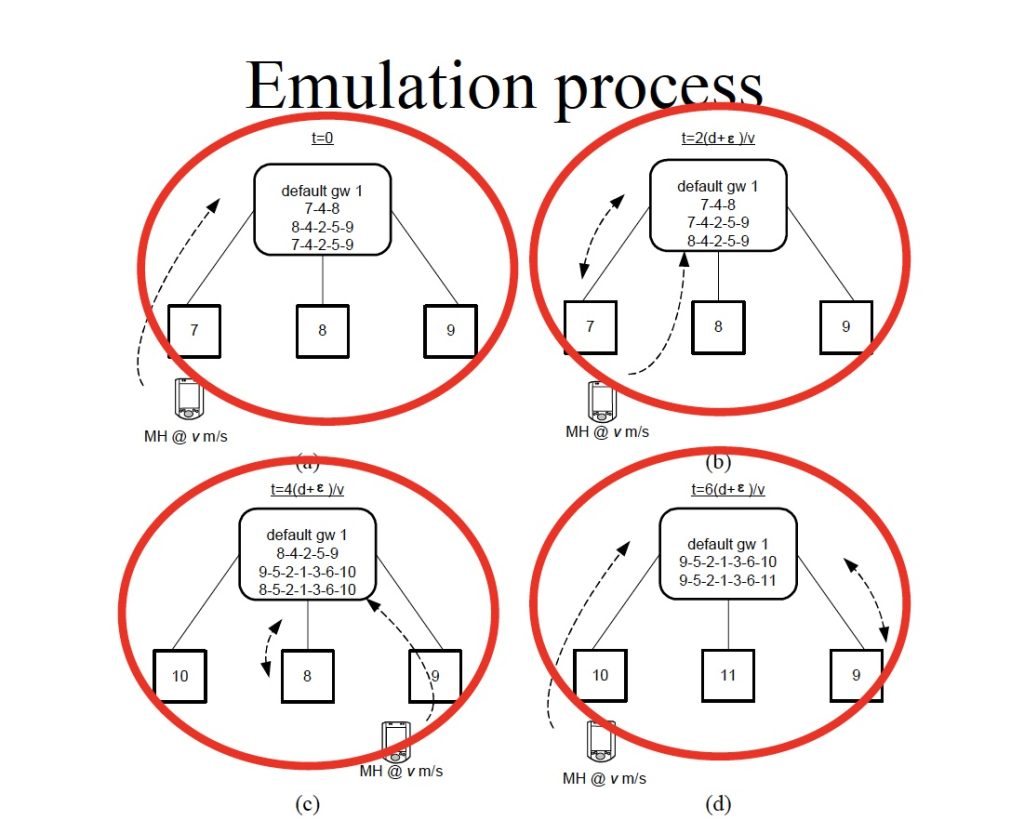
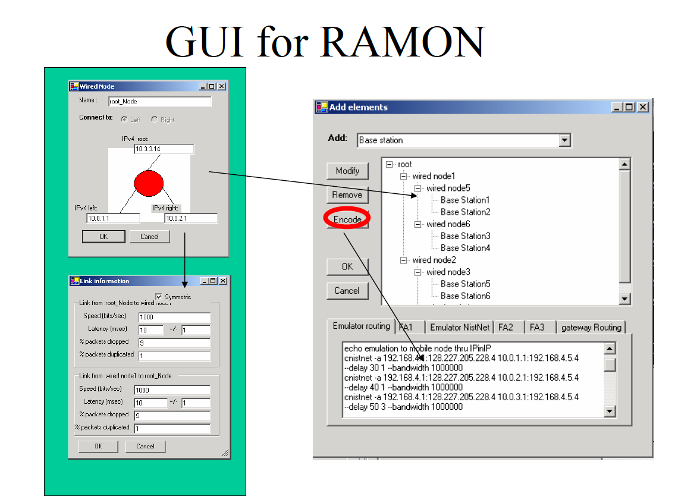
As shown as part of the emulation process and creating the Network (Illustrations from the Source): Using the RAMON GUI, researchers can build complex network environments:
-
- Adding Components: Users select from a dropdown menu to add Root Nodes, Wired Nodes, Base Stations, or Mobile Nodes.
-
- Configuring Nodes: For each Wired Node, specific IPv4 addresses can be assigned to different interfaces (e.g., root, left, and right) to create a hierarchical tree structure. Including, Home Agents, or Gateways that handle tunnel management or creation.
-
- Defining Links: The “Link Information” window allows users to set Speed (bits/sec), Latency (msec), and the percentage of dropped or duplicated packets to simulate various network conditions. This is part of the Layer-3 network emulation for the Internet Protocol or Packet-based communications, as the entire system is packet-based, this can be done using CNISTNET or other tools to emulate packet delays. You can create IP Tunnels either IPSec, IP-in-IP, or IPv4 over 6, among many other tunnels.
-
- Hardware Control: The software communicates with programmable attenuators via a parallel port to physically adjust signal strength, thereby emulating distance and speed.
A seen in the image called “Emulation Process”, the packets traverse different routes that are created and emulated as processing is being done with the cells in the emulator to map the realistic scenario. RF is emulated with overlapped scenarios can be replicated by the emulation process for packet-based or Internet packets are also processed by the emulator.
Mobile IP and Ghost Mobile IP Performance
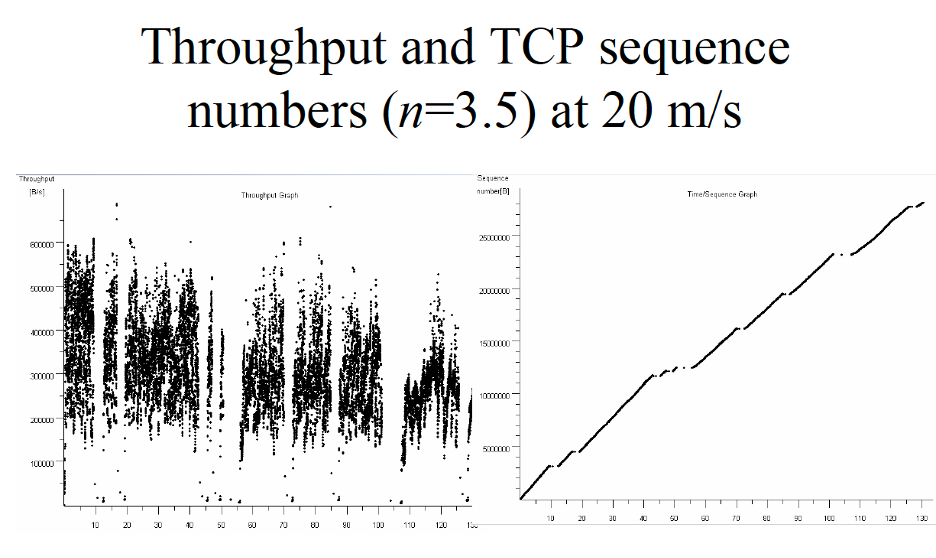
The results are impressive, now you can test any application on the emulator and obtain any performance number as required with performance improvements and higher bit-rates.
PhD Dissertation – Adaptive Networking Protocol for Rapid Mobile Environments
This the full dissertation (Download here) :
Talk Thesis – Presenting RAMON and Ghost Mobile IP
Presentation in PDF format (Download here).


