
Podcast: Play in new window | Download | Embed
Subscribe to TECHEDTV RSS | More
Good morning, good evening, good afternoon — wherever you’re watching from.
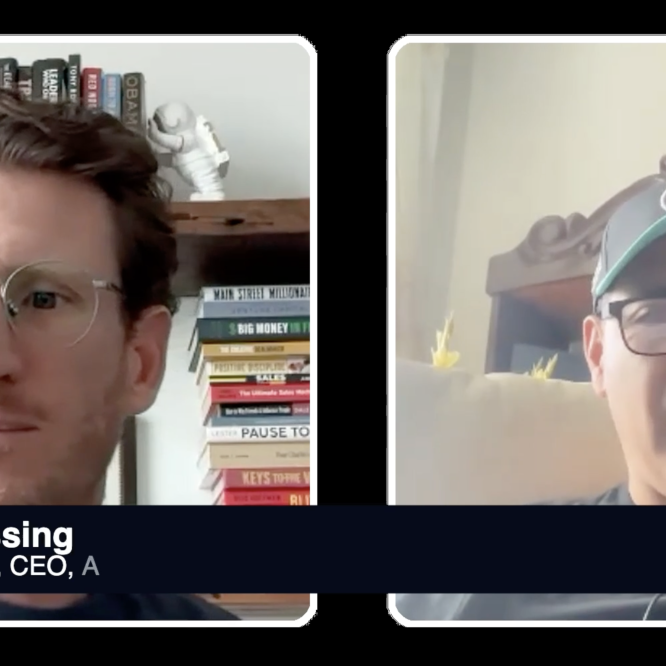
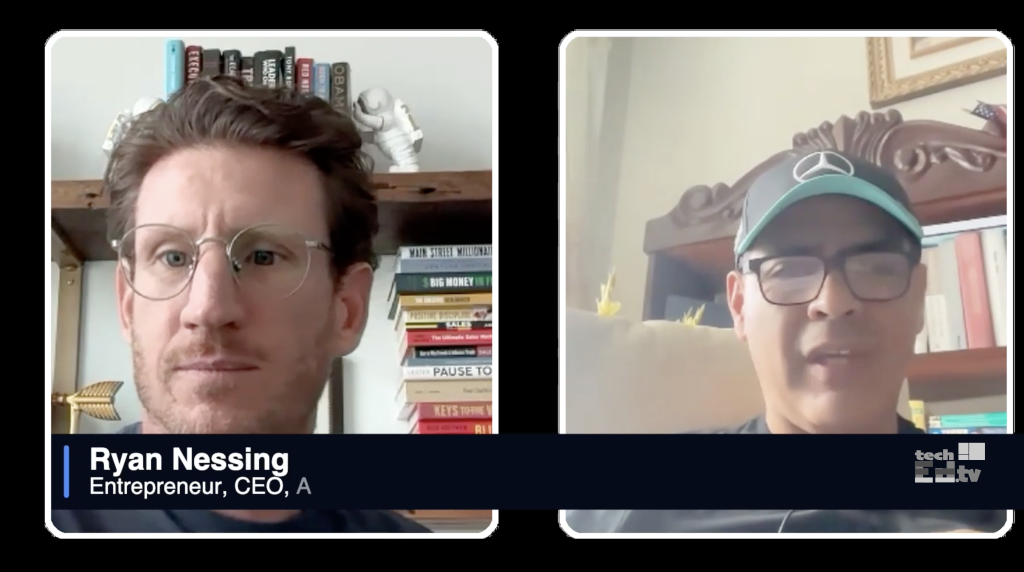
In the latest episode of TechedTV, I sat down with Ryan GNessin, a serial entrepreneur, former Glencore commodities trader, and angel investor who turned a blank-canvas move to New York into a massive e-commerce roll-up and exit.
Ryan’s journey is proof that bold career pivots can pay off — but only if you build real competitive advantages along the way.
From Life Insurance to Glencore’s $500M Trading Desk
Ryan started his career as a life insurance advisor in Australia but quickly realized it wasn’t for him. A mentor connected him with Glencore, one of the world’s largest commodity trading firms.
He joined the head office in Switzerland as a traffic analyst, then moved to Jakarta, Indonesia, on just four days’ notice. Over eight intense years, he rose to head the regional office and managed a $500 million physical coal trading desk.
It was high-stakes, high-travel work: meeting miners, partying with customers, flying 250–300 times a year, and riding the boom-and-bust cycles of the 2008 financial crisis.
The lifestyle was exciting in his late 20s and early 30s, but eventually the constant travel and lack of work-life balance caught up. In 2016, at age 33, Ryan walked away with no job, no girlfriend, and no plan — just a blank canvas in New York City.
The Blank Canvas That Became a $300M Exit
Instead of looking for another corporate role, Ryan started small: retail arbitrage — buying branded footwear (Nike, Adidas, Hoka) from stores and reselling on Amazon.
He quickly moved into private labeling and spotted an opportunity: thousands of small Amazon sellers generating solid revenue but lacking scale. Many could be acquired cheaply (2–3x EBITDA).
That insight became Elevator Brands — an e-commerce roll-up platform.
- Started with tiny acquisitions ($200K–$400K revenue businesses) as experiments.
- Raised $8M in 2020, then much larger rounds as COVID accelerated e-commerce.
- In 2021 alone, the team grew from 15 to 220 people and acquired 20 businesses (total of 32 across the journey).
- One standout: Rhino USA (motorsport accessories), acquired at ~$20M revenue and scaled to over $100M.
The result? A successful exit in 2023 after building a portfolio that proved the power of disciplined acquisition and operational scaling.
Key Lessons for Tech Founders & Entrepreneurs
1. Start Where You Stand — Then Iterate Ruthlessly Ryan didn’t have a perfect 10-year master plan. He started with what was in front of him (Amazon arbitrage) and iterated until it worked. “Start small, test, and if it works, double down — if not, move on.”
2. Build a Real Moat — or Get Commoditized This was Ryan’s strongest message for today’s founders, especially on platforms like Amazon:
- Patents matter — Utility patents create real barriers; design patents are weak.
- Brand recognition wins — Rhino USA customers happily pay more because they trust the brand.
- Supply chain advantages or unique customer relationships also work.
- Without a moat, you’re just another copycat competing on price. Margins erode fast when 1,000 sellers can source the same product from Alibaba.
Ryan’s advice: Ask yourself — Why would a customer choose my product over the 10 identical ones next to it?
3. Retail Arbitrage Is a Great Starter, Not a Destination Going to Costco or Nike outlets, flipping products on Amazon or eBay is an excellent low-risk way to learn e-commerce and generate cash. But it’s rarely a high-quality, high-exit business. Use those early profits to fund bigger experiments with better moats.
4. Timing + Tailwinds Matter — But So Does Grit COVID created massive e-commerce tailwinds, but Ryan was already testing the model before the pandemic. When opportunity struck, he was ready to raise capital and scale aggressively.
5. Career Changes Every ~10 Years Can Create an Exciting Life Ryan left a highly paid, specialized role in coal trading because it no longer felt right. His mentors thought he was crazy. He believes changing direction roughly every decade keeps life interesting — especially when you’re young and without heavy family commitments.
What Ryan Looks for as an Angel Investor Today
- Sector first: He’s especially excited about humanoid robotics (which he believes could become the largest industry in the world within 10–15 years) and AI.
- Strong teams and big-name investors on the cap table (for resilience during tough times).
- Clear competitive landscape analysis.
On the AI bubble question: Ryan sees high valuations and bubble-like P/E ratios, but also insatiable demand for GPUs (NVIDIA’s recent numbers prove it). His approach? Hold some dry powder for corrections, but avoid panic selling — the market could still run higher.
Final Takeaway for Founders
Whether you’re trading physical commodities, flipping shoes on Amazon, or building the next AI/robotics startup — sustainable success comes from creating a defensible moat.
Don’t compete in a sea of commodities. Build something customers recognize, protect it intelligently, and scale when the wind is at your back.
Big thanks to Ryan Gnessin for joining TechedTV and sharing his unfiltered journey.
Watch the full episode here: [Link to YouTube/TechedTV video]
What’s your biggest moat-building challenge right now? Drop a comment below — I’d love to hear from fellow founders.
‘
Ready to publish?
- SEO Title suggestion: From Coal Trading to $300M Exit: Moat-Building Lessons Every Tech Founder Needs
- Meta description: Ryan Nessing went from Glencore coal trader to a $300M e-commerce exit. Here are his hard-earned lessons on building moats, scaling on Amazon, and why most founders fail without real competitive advantage.
- Categories/Tags: Entrepreneurship, Startups, E-commerce, Fintech/Tech, Leadership, Investing
TRANSCRIPT
[00:00:03] Dr. Edwin Hernandez: Good morning, good evening, good afternoon.
[00:00:13] Dr. Edwin Hernandez: You guys are watching TechedTV with Dr.
[00:00:15] Dr. Edwin Hernandez: Edwin Hernandez.
[00:00:16] Dr. Edwin Hernandez: And today we have a new guest, a friend that we met a couple a month ago.
[00:00:20] Dr. Edwin Hernandez: Ryan Nessing from, where are you based today, Ryan?
[00:00:23] Ryan Nessing: Well, I’m at home, in my office, Austin, Texas.
[00:00:25] Ryan Nessing: Great.
[00:00:25] Dr. Edwin Hernandez: And you are Australian, is that right?
[00:00:28] Dr. Edwin Hernandez: is that right?
[00:00:28] Ryan Nessing: Well, yes.
[00:00:29] Ryan Nessing: well, I spent 10 year…
[00:00:30] Ryan Nessing: I’m actually a dual citizen, half I’ve got Australian citizenship and also American, as of six months ago.
[00:00:36] Ryan Nessing: Congratulations.
[00:00:36] Ryan Nessing: But I grew up, I actually grew up South African, so…
[00:00:38] Ryan Nessing: (laughs) Oh, okay.
[00:00:40] Ryan Nessing: So I have a bit of a mongrel mixed accent, grew up South African, lived there till I was 14, and then I spent the next 10 years in Sydney.
[00:00:47] Dr. Edwin Hernandez: Okay, so you’re familiar with Trevor Noah then?
[00:00:49] Ryan Nessing: Oh, yes, for sure.
[00:00:50] Dr. Edwin Hernandez: (laughs) Great.
[00:00:50] Dr. Edwin Hernandez: Yeah, so yeah, so we have a very interesting conversation with Ryan, because he’s an expert in all kinds of stuff, especially when it comes to investment, and is an entrepreneur, CEO for several of his ventures, $300 million deals, and I can go on and on and on.
[00:01:06] Dr. Edwin Hernandez: But I would like to, Ryan to tell us more about, his background a little bit.
[00:01:10] Dr. Edwin Hernandez: you went to college in Australia, so how is that different from the United States?
[00:01:14] Ryan Nessing: Yeah, you in the US, college seems to be like a very impactful period of someone’s life, and which college you go to matters tremendously.
[00:01:23] Ryan Nessing: in the US…
[00:01:24] Ryan Nessing: Sorry, that’s in the US.
[00:01:25] Ryan Nessing: In Australia, you college was not as big a deal, I have to say.
[00:01:29] Ryan Nessing: I did a Bachelor of Commerce at the University of New South Wales.
[00:01:32] Ryan Nessing: if you’re gonna do business in Sydney, then that and the University of Sydney are kind of the two places you would want to go to.
[00:01:38] Ryan Nessing: And, frankly, my college experience was just okay.
[00:01:42] Ryan Nessing: it was nothing special.
[00:01:43] Ryan Nessing: Frankly, I was spending most of my time, doing odd jobs, working, trying to make money, and figure out next steps.
[00:01:49] Ryan Nessing: So it just doesn’t have the same kind of cachet as it does here in the US, which is a pity, because I think it’s a really formative and important part of your life, and, probably there should be a little more emphasis on it.
[00:01:59] Ryan Nessing: But, for me, that wasn’t the case.
[00:02:00] Ryan Nessing: (laughs) So you might ask someone else who has a different opinion, but for the most part, that’s I think the general consensus.
[00:02:05] Dr. Edwin Hernandez: So, how do you go from your time in college, let’s say, that it was maybe not that eventful for our interest today- Yeah.
[00:02:12] Ryan Nessing: …
[00:02:12] Dr. Edwin Hernandez: but to Glencore, which I believe is one of your first main, let’s say- Yeah.
[00:02:18] Ryan Nessing: …
[00:02:18] Dr. Edwin Hernandez: jobs?
[00:02:19] Ryan Nessing: Yeah, so, I’ll give you I’ll try give you the 30,000-foot, brief summary of my last kind of 20 years, my career.
[00:02:24] Ryan Nessing: actually, my very first job was a life insurance advisor.
[00:02:27] Ryan Nessing: I became a financial planner, an insurance advisor, and I got a scholarship with one of the insurance companies in the US, in Australia, I beg your pardon.
[00:02:34] Ryan Nessing: And, I just really did not like the industry.
[00:02:36] Ryan Nessing: I found that to be successful, particularly in life insurance, you had to kind of sell to someone at the negative end of the spectrum.
[00:02:42] Ryan Nessing: You know, what happens to you if, your husband dies, and God forbid, something goes wrong, and how, who’s gonna take care of you?
[00:02:48] Ryan Nessing: I just didn’t particularly enjoy it.
[00:02:50] Ryan Nessing: And, I asked my boss one day, I said, “Listen, this is not for me.
[00:02:55] Ryan Nessing: I’d I’d like to leave.
[00:02:55] Ryan Nessing: I’ll give you as long as you need me to stay, but, but I’d like to leave.” I only did that for about a year.
[00:02:59] Ryan Nessing: And, he said, “Well, look, you know, I appreciate that.
[00:03:02] Ryan Nessing: I’ve got a friend who happens to be working for a company called Glencore.
[00:03:06] Ryan Nessing: It’s a private, very successful source commodities trading company, and the guys make a lot of money, and it’s a fascinating career, and why don’t you check it out?” And so, long story short, I interviewed with those guys, and there was something about the mystique of this company that, that enthralled me a little bit.
[00:03:21] Ryan Nessing: and so I did a bunch of interviews, and I went to Switzerland, and I got my first job, with those guys in the head office in Switzerland as what they call a traffic, analyst, which is basically doing logistics.
[00:03:31] Ryan Nessing:
[00:03:31] Ryan Nessing: So I did that for a year, and then my boss called me in one day and said, “Look, there’s an opportunity to move to Jakarta,” and I thought he said Chicago, but no, he said, “Jakarta, Indonesia.” and, he said, “You can go make a name for yourself in the company,” and, and it’s part of the coal division, and you’d be buying coal from the Indonesian mines and selling it to the rest of the world.
[00:03:48] Ryan Nessing: and he said, “Today’s Thursday, and I’d like you to be down there by Monday.” What?
[00:03:51] Ryan Nessing: and, I knew nothing about Indonesia, but, I was single and didn’t really have anything to lose, so I said, “What the hell?” and so I went down there, and it was just a fascinating life experience.
[00:04:00] Ryan Nessing: I spent the next eight years there, and eventually grew to be the head of the office and the head of the region, and managed, eventually a $500 million commodities trading desk.
[00:04:10] Ryan Nessing: And it was just a wonderful life experience, frankly.
[00:04:12] Ryan Nessing: we were doing a ton of travel.
[00:04:13] Ryan Nessing: I mean, I was probably on an airplane, you maybe 250 or 300 flights a year.
[00:04:17] Ryan Nessing: So it was just constantly going to meet miners in the mines.
[00:04:20] Ryan Nessing: Then, and it was physical trading, this was not this was not paper trading where you’ve got 12, where people imagine where you’ve got like 12 screens on your desk and you’re trading paper.
[00:04:28] Ryan Nessing: No, this was physical trading.
[00:04:30] Ryan Nessing: So you would physically go and meet the miners, go out with them, schmooze, party, have a good time, and then you would get on a plane, and then go meet a potential buyer in India or China or Taiwan or Malaysia or, Bangkok or what have you.
[00:04:42] Ryan Nessing: and so it was a fun, it was a fun experience.
[00:04:45] Ryan Nessing: The commodity markets were booming, while I was there.
[00:04:48] Ryan Nessing: We also saw the 2008 crash, and so I got to see a lot of boom and bust.
[00:04:54] Ryan Nessing: I got to see people make stupid amounts of money, very quickly, and then lose a lot of money very quickly.
[00:04:59] Ryan Nessing: I got to……
[00:05:01] Ryan Nessing: you know, make some great relationships, work really hard.
[00:05:03] Ryan Nessing: The one thing I didn’t get to have really was to have a really solid stable relationship, and so that’s not a career that is very amenable to like a nice family, stable work/life balance, right?
[00:05:13] Ryan Nessing: that’s hardcore all in, your customers or your friends.
[00:05:16] Ryan Nessing: There’s not a lot of vacation time.
[00:05:18] Ryan Nessing: There’s not a lot that goes on outside of that, but for me, it was fine, it was great.
[00:05:22] Ryan Nessing: I was in my late 20s, I was in my…
[00:05:23] Ryan Nessing: and early 30s, and I was having a great time.
[00:05:25] Ryan Nessing: but eventually it gets old and, you have enough of living on an airplane or what have you, and I decided in 2016 ultimately to call it quits and I left Indonesia, and essentially moved to New York.
[00:05:35] Ryan Nessing: And I was in New York blank canvas looking for, no job, no career, no girlfriend, just kind of blank canvas.
[00:05:41] Ryan Nessing: and then then I started an e-commerce business, which initially was something I used to get a visa frankly, because I needed to get a work visa.
[00:05:47] Ryan Nessing: And so I decided I’ll start a company, I’ll sponsor myself, get a visa.
[00:05:51] Ryan Nessing: But it surprised me that the e-commerce business took off, which ultimately turned into a roll-up, where we raised, a couple hundred million dollars, and then exited that in 2023, and, we acquired 32 companies and built the team to about 200 people.
[00:06:04] Ryan Nessing: and so yeah, that’s, and, that we exited that in 2023.
[00:06:07] Ryan Nessing: So, I’m giving you a 30,000-foot view of, of,
[00:06:09] Dr. Edwin Hernandez: I’m happy to dig into No, that’s great because actually, people that are, like, entrepreneurs like you, they want to see other people succeed at what happened in their careers, because sometimes I think the fear that a lot of people have is that, okay, I have my job, let’s say in your case, commodities trader- …
[00:06:24] Dr. Edwin Hernandez: Indonesia, and you’re like, “Okay, do I quit this and start a black blank canvas?” Like you said, like completely reinvent yourself in a new city, new town, create a new opportunity, and I think that fear that people have.
[00:06:35] Dr. Edwin Hernandez: Did you ever fear that you made a mistake when you were in New York?
[00:06:39] Ryan Nessing: Look, it’s a great question.
[00:06:41] Ryan Nessing: And one thing I’ve learned, in life and in business is there’s no real black and white to anything, right?
[00:06:47] Ryan Nessing: There’s 50,000 shades of gray.
[00:06:48] Ryan Nessing: and there’s no one way to do things.
[00:06:50] Ryan Nessing: there’s a million ways to do things.
[00:06:52] Ryan Nessing: I remember before I left, there were several very smart people of mine who were mentors, who said, “You’re crazy.” (laughs) in, you’re one of the world experts in trading coal.
[00:07:00] Ryan Nessing: Very few people know the market as well as you do.
[00:07:02] Ryan Nessing: It’s very hard for someone who doesn’t know the market to get into the market.
[00:07:06] Ryan Nessing: There’s barriers to entry, so…
[00:07:08] Ryan Nessing: and you’re making great money, so you’re crazy to leave.” and my perspective was, listen, I…
[00:07:12] Ryan Nessing: that’s a very valid argument.
[00:07:14] Ryan Nessing: (laughs) It’s a valid argument, but, it doesn’t feel right to me.
[00:07:17] Ryan Nessing: I’m still young.” At the time, I was 33.
[00:07:20] Ryan Nessing: “And you can still have numerous other careers.” I mean, if I could have stayed and traded, coal, and moved to New York, and had more of a work/life balance, I probably would have stuck with the industry, but that wasn’t available to me.
[00:07:32] Ryan Nessing: I would have had to stay in, Southeast Asia or somewhere, or go somewhere that I didn’t necessarily want to be.
[00:07:38] Ryan Nessing: So for me, it was a matter of, it was a matter of, necessity that I had to find something new.
[00:07:43] Ryan Nessing: And frankly, after doing something for a decade, I thought it would be exciting and a fun challenge to try something new.
[00:07:48] Ryan Nessing: You know, someone once said to me, if you change your career every 10 years, or you do something different every 10 years, you’re probably going to have a really exciting and interesting life.” And that kind of stuck with me and resonated with me, and I thought, “Okay, I’ve been doing this for 10 years, let me go try the next thing and see, and see how that plays out.” And, I had fortunately done, reasonably well for myself.
[00:08:07] Ryan Nessing: You know, at that stage, I didn’t have a family and kids, so that’s the time to try things, right?
[00:08:11] Ryan Nessing: is when you’re single and you don’t have those commitments, you can afford to make a mistake.
[00:08:15] Ryan Nessing: And so, it’s much easier to do it in those circumstances.
[00:08:18] Dr. Edwin Hernandez: But then, then, Elevator Brands, I believe is the last one that you said, like, you handled is, I will say a $300 million exit.
[00:08:23] Dr. Edwin Hernandez: is that right?
[00:08:24] Dr. Edwin Hernandez: Is that- Yeah.
[00:08:25] Ryan Nessing: …
[00:08:25] Dr. Edwin Hernandez: what you refer to?
[00:08:26] Dr. Edwin Hernandez: And, so what’s the genesis of Elevator Brands, and how do you, let’s say, well, envision it?
[00:08:31] Dr. Edwin Hernandez: Like, is this something that you picture from the beginning or something that kind of, like, was working itself out?
[00:08:36] Dr. Edwin Hernandez: Yeah.
[00:08:37] Ryan Nessing: in my experience, I usually have found …
[00:08:40] Ryan Nessing: and again, there’s many ways to do things.
[00:08:41] Ryan Nessing: I have usually found the phrase “start where you stand” applies, and then iterate and iterate and iterate until it works.
[00:08:49] Ryan Nessing: That’s been my approach, as opposed to having this grand strategy that I executed perfectly from day one.
[00:08:55] Ryan Nessing: So, that’s not how it happened.
[00:08:55] Ryan Nessing: what I did was, I started initially trading footwear on Amazon.
[00:08:59] Ryan Nessing: So I was buying branded footwear, Adidas and Hoka, Nike and New Balance.
[00:09:04] Ryan Nessing: I was buying it initially from stores, and then eventually I found some wholesalers and distributors where I would buy it, and then I would put it up and sell sell it on Amazon.
[00:09:11] Ryan Nessing: and I did that for a couple of years.
[00:09:13] Ryan Nessing: And then I always found it interesting, and by the way, I had also started dabbling with private label, where you start a brand from scratch and you launch it and and you try and sell it on Amazon.
[00:09:22] Ryan Nessing: And so, then I looked at the Amazon ecosystem, and, there was, over 100,000 sellers who were making more than a million dollars in revenue.
[00:09:29] Ryan Nessing: And most of those businesses were small brands.
[00:09:32] Ryan Nessing: Many of them were, small commodity-type businesses, but you could buy them for, like, two times or three times EBITDA.
[00:09:37] Ryan Nessing: And I thought, that’s very interesting because what if you could roll them up, package them all together, that would be something that would be, an interesting business model.
[00:09:45] Ryan Nessing: So so, like …
[00:09:45] Ryan Nessing: I always believe in starting and testing small, and if it doesn’t work, well then that’s okay, you just move onto the next thing.
[00:09:50] Ryan Nessing: And if it does work, then you double down, and you double down again.
[00:09:53] Ryan Nessing: So that’s how we did it.
[00:09:54] Ryan Nessing: We bought our first business in 2019.
[00:09:56] Ryan Nessing: It was $200,000 of revenue.
[00:09:58] Ryan Nessing: It was tiny.
[00:09:58] Ryan Nessing: It was just an experiment to kind of dip our toe in the water and see what it’s like.
[00:10:02] Ryan Nessing: And then we made another acquisition early 2020 just before COVID hit.
[00:10:06] Ryan Nessing: And again, that was, like, a $400,000 revenue business.
[00:10:09] Ryan Nessing: So these are tiny acquisitions that we paid maybe two or two and a half times earnings.
[00:10:13] Ryan Nessing: and both of those went well.
[00:10:14] Ryan Nessing: And then, of course, COVID hit.
[00:10:16] Ryan Nessing: And that’s when I took a step back, and I said, “Okay, wow, this is really interesting now because, in times of distress, that’s when you have the biggest opportunity to make something happen.” And so, when COVID hit, investors became enthralled with e-commerce, and they …
[00:10:30] Ryan Nessing: and we …
[00:10:30] Ryan Nessing: and I was introduced to a couple of investors who liked this idea that we were buying small businesses, and liked the idea that I had a background in running big businesses already, and could see the track record over the previous couple of years that we were running a frugal, profitable, streamlined business.
[00:10:46] Ryan Nessing: And so we raised a bit of …
[00:10:47] Ryan Nessing: we raised, like, $8 million early of mid-2020.
[00:10:50] Ryan Nessing: Then we bought another couple of businesses, and those performed very well because we had massive tailwinds at that time, right?
[00:10:55] Ryan Nessing: Everything e-commerce was growing gangbusters, so our track record looked really, really strong by the time we got to early 2021.
[00:11:01] Ryan Nessing: And and that’s when we raised a very significant amount of equity and debt, and that’s when it was balls to the wall, gangbusters.
[00:11:07] Ryan Nessing: You know, when we started 2021, we had planned to buy maybe five businesses.
[00:11:11] Ryan Nessing: We ended up buying 20.
[00:11:12] Ryan Nessing: Wow.
[00:11:13] Dr. Edwin Hernandez: Wow.
[00:11:13] Ryan Nessing: So we grew the team from 15 people to 220, in that year.
[00:11:17] Ryan Nessing: So 2021 was a very frenetic year of activity.
[00:11:21] Ryan Nessing: And, it was a very, very, cool and interesting experience.
[00:11:24] Dr. Edwin Hernandez: Great, great.
[00:11:25] Dr. Edwin Hernandez: Excellent.
[00:11:25] Dr. Edwin Hernandez: teach …
[00:11:26] Dr. Edwin Hernandez: what can you teach to an entrepreneur right now that is trying to get into the e-commerce platforms?
[00:11:30] Dr. Edwin Hernandez: Is it too late?
[00:11:30] Dr. Edwin Hernandez: Is it, what’s gonna happen- …
[00:11:32] Dr. Edwin Hernandez: with all these tariffs?
[00:11:33] Dr. Edwin Hernandez: Do you see new opportunities now that, Donald Trump has placed his tariffs to China and the Chinese competitors are becoming less of a competitor, I guess?
[00:11:41] Ryan Nessing: Yeah, I mean, there’s more geopolitical uncertainty, so that’s something to factor.
[00:11:45] Ryan Nessing: the most important thing that I think is to have a product that is …
[00:11:48] Ryan Nessing: that has something of a moat, a competitive advantage, so a moat could be, a patent.
[00:11:53] Ryan Nessing: And you have some patents, so you understand that well.
[00:11:56] Ryan Nessing: Right.
[00:11:57] Ryan Nessing: so if a business has a patent, I think that’s great.
[00:11:59] Ryan Nessing: a design patent isn’t worth too much.
[00:12:01] Ryan Nessing: A utility patent is worth a lot.
[00:12:02] Ryan Nessing: It’s harder to get.
[00:12:04] Ryan Nessing: It’s more expensive.
[00:12:04] Ryan Nessing: but if you have something that’s worth protecting, then it’s and that can in fact get a utility patent, it’s worth doing.
[00:12:10] Ryan Nessing: or you might have some kind of, supply chain advantage, where you’re able to source it from somewhere that other people can’t easily get access to.
[00:12:18] Ryan Nessing: See, if you’re buying a product that anyone can, can pick up the phone and source from Alibaba or source from somewhere in China, and it doesn’t really have any kind of competitive advantage, it’s very hard to be successful.
[00:12:30] Ryan Nessing: Because especially on a platform like there’s just thousands of people every day looking for white space.
[00:12:36] Ryan Nessing: And so, if they see a product that’s doing really well, very quickly, they will launch a similar product, a copycat product that looks very similar to yours.
[00:12:43] Ryan Nessing: And then over time, your margins get eroded because everyone’s competing for the same pie.
[00:12:47] Ryan Nessing: And, if someone looks at your product next to, 10 other products, is there a reason why they’re going to buy yours versus someone else’s?
[00:12:53] Ryan Nessing: What’s the reason?
[00:12:54] Ryan Nessing: Because on Amazon, for the most part, if you type in, don’t beach tent, they almost all look the same.
[00:12:58] Ryan Nessing: It’s very hard to differentiate.
[00:13:00] Ryan Nessing: Right.
[00:13:00] Ryan Nessing: And so why would someone why do you deserve to get the customer versus someone else?
[00:13:03] Ryan Nessing: So, if you have a brand where people truly recognize the brand, one of the businesses we acquired in 2020, sorry, 2022, I beg your pardon, we acquired in 2022 is Rhino USA.
[00:13:13] Ryan Nessing: And at the time, it was doing about $20 million of revenue.
[00:13:15] Ryan Nessing: and Rhino USA, they sell motorsport accessories.
[00:13:18] Ryan Nessing: So, if you’re into motorsports, and off-roading, you they sell ratchet straps and D-rings and tire inflators and things of that nature.
[00:13:25] Ryan Nessing: And if you’re into that, you probably recognize the brand.
[00:13:28] Ryan Nessing: Most people would recognize the brand.
[00:13:30] Ryan Nessing: It’s a real brand.
[00:13:30] Ryan Nessing: Those guys have done tremendous grassroots marketing.
[00:13:33] Ryan Nessing: They go to all the conferences.
[00:13:34] Ryan Nessing: They have very strong touchpoint customer service.
[00:13:37] Ryan Nessing: It’s a real brand that people recognize.
[00:13:39] Ryan Nessing: And so when that’s sitting on the shelf next to other people, people are happy to buy the Rhino USA, even if it’s a little more expensive.
[00:13:46] Ryan Nessing: And that’s how you know you have a brand.
[00:13:47] Ryan Nessing: And that business, you know, three years later, as I said, we bought it for about 20…
[00:13:51] Ryan Nessing: It was doing about 20 million of revenue.
[00:13:53] Ryan Nessing: This year, it’s going to do well north of 100 million.
[00:13:55] Ryan Nessing: So, that business has continued to grow and leverage the customer base, their suppliers.
[00:13:59] Ryan Nessing: And, now they’ve got into brick and mortar, and and they’ve really scaled rapidly.
[00:14:02] Ryan Nessing: so I think that’s the key is, you’ve got to have some kind of competitive advantage, that sets you apart from everyone else, that you’re not just a commodity competing with 1,000 other copycats.
[00:14:11] Dr. Edwin Hernandez: Great, great.
[00:14:11] Dr. Edwin Hernandez: That’s a great advice, especially for all entrepreneurs right now that are trying to get into the e-commerce platforms.
[00:14:16] Dr. Edwin Hernandez: And one very important thing that as a successful, entrepreneur, can share with our audience is the fact that you had, basically, not only Elevator Brands provided you with with this catapult.
[00:14:28] Dr. Edwin Hernandez: But let’s go back to to the grassroots, when you were coming back to New York first time, and then, you were doing the simple, I will say, arbitrage, sort of buying the shoes somewhere and resell them somewhere else.
[00:14:42] Dr. Edwin Hernandez: for those entrepreneurs that are really at the very, very early stages, do you recommend that, that model?
[00:14:47] Dr. Edwin Hernandez: Like, for example, go to Costco, purchase things that are, probably at a discount, put them back into some eBay or Amazon, and start right there, to get the foot on the ground, get the feet wet to get to know what really this e-commerce play is about?
[00:15:00] Ryan Nessing: Yeah, you know, there’s,
[00:15:03] Ryan Nessing: Look, not…
[00:15:03] Ryan Nessing: You know, not all businesses are created equal and not all business models are created equal.
[00:15:07] Ryan Nessing: And so, you have to understand the business model you’re dealing with.
[00:15:09] Ryan Nessing: So, you know, a SaaS business model, you’re probably not going to make any money.
[00:15:12] Ryan Nessing: You’re going to be burning cash.
[00:15:13] Ryan Nessing: But then one day, you could sell it for a multiple of revenue, and you could make very good money.
[00:15:17] Ryan Nessing: In the case of doing retail arbitrage, it’s almost the exact opposite.
[00:15:21] Ryan Nessing: It’s a nice cash business.
[00:15:22] Ryan Nessing: So, you can get in there and you can make a bit of cash, but you’re never going to sell that for a multiple of revenue, right?
[00:15:27] Ryan Nessing: you…
[00:15:27] Ryan Nessing: It’s just, the exit potential for a business like that is very low.
[00:15:30] Ryan Nessing: So, you have to kind of pick the model that fits your profile, fits where you are, fits your current liquidity, fit…
[00:15:36] Ryan Nessing: you know, you got to pick something that suits you.
[00:15:37] Ryan Nessing: A business model like that, if you’ve never run a business, it’s not a bad way to get your toe in the door.
[00:15:42] Ryan Nessing: Because, you…
[00:15:43] Ryan Nessing: Let’s say you go to Walmart and you buy…
[00:15:44] Ryan Nessing: let’s say you go to a Nike outlet store and you buy a pair of Nike shoes for 50 bucks.
[00:15:48] Ryan Nessing: You can see what price that shoe is selling on Amazon for.
[00:15:51] Ryan Nessing: Now, let’s say you see that that same shoe is selling on Amazon for 100 bucks, and then you calculate this…
[00:15:55] Ryan Nessing: and by the way, there are softwares that do this for you.
[00:15:57] Ryan Nessing: And then you calculate the Amazon fees of 15% and the shipping and all that stuff, and you figure out, “Okay, well, I could make a $20 profit on a $50 pair of shoes.” Not a bad return on investment, right?
[00:16:06] Ryan Nessing: 40% return on investment, right?
[00:16:08] Ryan Nessing: Contribution margin before overhead and other expenses, not bad.
[00:16:12] Ryan Nessing: So, it’s a low-risk way to get into the game.
[00:16:15] Ryan Nessing: And then, over time, to scale a business like that is relatively challenging, and it’s never gonna be a very high-quality business.
[00:16:22] Ryan Nessing: But what you can do is you can use those cash flows to then reinvest into other exciting opportunities, which is what we did.
[00:16:29] Ryan Nessing: You know, Amazon’s a classic case where, you know, Bezos was very profitable selling books, and then he used those cash flows to invest into other experiments, which he didn’t know if they were gonna work.
[00:16:38] Ryan Nessing: ‘Cause if it’s an experiment, you don’t know if it’s gonna succeed.
[00:16:40] Dr. Edwin Hernandez: Let’s make the Amazon Cloud.
[00:16:41] Dr. Edwin Hernandez: (laughs) Yeah.
[00:16:42] Ryan Nessing: Let’s make Amazon Cloud.
[00:16:43] Ryan Nessing: Let’s do third-party marketplace.
[00:16:44] Ryan Nessing: Like, let’s test, Amazon.
[00:16:46] Ryan Nessing: and what we see today are experiments that have gone wildly right.
[00:16:50] Ryan Nessing: But Amazon also had experiments that went wildly wrong, right?
[00:16:52] Ryan Nessing: I mean, they had their, the Fire Phone at one stage, and, they blew billions and billions of dollars on that and so I’m a big believer in starting with something that kind of resonates with you, getting going, hopefully you get some traction and then you double double down, and then you experiment with other things that eventually that can turn they have a more higher potential rate of return.
[00:17:09] Dr. Edwin Hernandez: Coming back to that part of- Yeah.
[00:17:11] Ryan Nessing: …
[00:17:11] Dr. Edwin Hernandez: your investment criteria, and just wrapping up their interview.
[00:17:14] Dr. Edwin Hernandez: You are an angel investor, obviously.
[00:17:16] Dr. Edwin Hernandez: you invest in different ventures.
[00:17:18] Dr. Edwin Hernandez: What do you see in the business plan?
[00:17:21] Dr. Edwin Hernandez: What do you see?
[00:17:21] Dr. Edwin Hernandez: Do you see more of, a potential, SaaS model?
[00:17:25] Dr. Edwin Hernandez: Do you see more something that has, the team?
[00:17:28] Dr. Edwin Hernandez: Do you see a little bit of both?
[00:17:29] Dr. Edwin Hernandez: what is that you like to see and what are the amount that you usually invest as an angel in startups right now?
[00:17:35] Dr. Edwin Hernandez: Yeah.
[00:17:36] Ryan Nessing: so, one of the areas that I’ve invested in recently is the humanoid robot space.
[00:17:40] Ryan Nessing: I think that is just fascinating.
[00:17:42] Ryan Nessing: I think it’s gonna be one of the biggest, I think it probably will be by far the biggest industry in the world in probably 10 years from now or 15 years from now.
[00:17:48] Ryan Nessing: so, with something like that, if a business has significant traction, has a very strong, team.
[00:17:54] Ryan Nessing: I mean, these are kind of…
[00:17:55] Ryan Nessing: I think picking the sector is a really important piece first.
[00:17:58] Ryan Nessing: and then, it’s table stakes stuff.
[00:18:00] Ryan Nessing: Of course it has to have a strong team, right?
[00:18:02] Ryan Nessing: and, it helps if you’ve got some big name investors behind them who have deep pockets because, you inevitably these businesses are gonna have challenges along the way.
[00:18:09] Ryan Nessing: And to the extent that you’ve got strong investors on your cap table, is gonna make a big difference to help you get through some of those tough times and see through to the other side.
[00:18:18] Ryan Nessing: so, those are, like the macro…
[00:18:19] Ryan Nessing: obviously they have to look at the macro picture.
[00:18:21] Ryan Nessing: You gotta look at the competitive landscape.
[00:18:22] Ryan Nessing: I mean, all those things are kind of table stakes.
[00:18:24] Ryan Nessing: but to me, the sector is what I find interesting.
[00:18:27] Ryan Nessing: yeah.
[00:18:27] Dr. Edwin Hernandez: So robotics right now is one of the techs that you’re very interested in, I guess.
[00:18:31] Ryan Nessing: robots, robot- I’m very interested in that space.
[00:18:32] Ryan Nessing: AI- Obviously.
[00:18:33] Ryan Nessing: …
[00:18:33] Dr. Edwin Hernandez: I assume, all the stuff with AI.
[00:18:35] Dr. Edwin Hernandez: Yeah.
[00:18:35] Dr. Edwin Hernandez: It’s a- Yeah.
[00:18:36] Ryan Nessing: It’s, yeah.
[00:18:36] Ryan Nessing: It’s…
[00:18:36] Dr. Edwin Hernandez: it’s…
[00:18:36] Dr. Edwin Hernandez: So you see, a lot of people are calling it the AI bubble, because NVIDIA is basically selling the parts to OpenAI.
[00:18:45] Dr. Edwin Hernandez: AI is investing the money that, that…
[00:18:47] Dr. Edwin Hernandez: from NVIDIA back into parts.
[00:18:49] Dr. Edwin Hernandez: So it’s like kind of like this money is floating.
[00:18:52] Dr. Edwin Hernandez: That’s why some people call it the AI bubble.
[00:18:53] Dr. Edwin Hernandez: Right.
[00:18:53] Dr. Edwin Hernandez: Or the AI bubble, just like in the dotcom bubble, like I think you saw that or the 2008, financial crisis.
[00:18:59] Dr. Edwin Hernandez: Do you see AI as a bubble or is it just, something that, is…
[00:19:02] Dr. Edwin Hernandez: it has more tangible, legs that to sustain the valuation on the…
[00:19:06] Dr. Edwin Hernandez: on on this, venture?
[00:19:08] Ryan Nessing: (laughs) Yeah.
[00:19:08] Ryan Nessing: So, let me think about how to answer this.
[00:19:10] Ryan Nessing: I think, we’re definitely in a bubble in the sense that, if you look at the P/Es, we’re at like super high levels relative to historical standards.
[00:19:18] Ryan Nessing: so, like, we’re definitely in bubble territory, right?
[00:19:20] Ryan Nessing: There’s no question.
[00:19:21] Ryan Nessing: What we…
[00:19:21] Ryan Nessing: what a bubble requires to burst, let’s say, is something to prick it, something to pop it.
[00:19:26] Ryan Nessing: And what that impetus is, is, I don’t know, usually it might be an increase in interest rates, but I think that’s unlikely in the near future.
[00:19:32] Ryan Nessing: A wealth tax, for example, could be the thing that pricks the bubble, because people need liquidity and then they have to sell.
[00:19:38] Ryan Nessing: And so there needs to be some impetus, which I can’t see.
[00:19:40] Ryan Nessing: It may be years before that comes along, but we’re certainly in bubble territory.
[00:19:44] Ryan Nessing: valuations are clearly high and clearly expensive.
[00:19:47] Ryan Nessing: but on the other hand, like NVIDIA had annual shareholders meeting, their earnings report yesterday, and, they showed they had $57 billion in revenue this quarter, and I think next quarter, $67 billion in revenue.
[00:19:57] Ryan Nessing: So, there’s more demand than ever for GPUs.
[00:19:59] Ryan Nessing: they’re lengthening their forecast.
[00:20:01] Ryan Nessing: So, I don’t know that I would say NVIDIA is a bubble per se.
[00:20:04] Ryan Nessing: I mean, it’s traveling…
[00:20:05] Ryan Nessing: it’s trading at a reasonably high PE, but, it seems to be able to continually justify, that and the demand for GPUs and the Blackwell in particular just seems enormous and insatiable.
[00:20:15] Ryan Nessing: And so, it’s hard to say.
[00:20:16] Ryan Nessing: it’s hard to say.
[00:20:17] Ryan Nessing: I mean, the way I treat it at the moment is, I’m not going crazy investing.
[00:20:20] Ryan Nessing: I’m trying to hold some dry powder, but I’m not selling anything either.
[00:20:24] Dr. Edwin Hernandez: (laughs) Okay.
[00:20:24] Ryan Nessing: and so that’s how I look at it.
[00:20:26] Ryan Nessing: And, at some point for sure there’s gonna be a correction and hopefully you’ve got some dry powder to take advantage of that.
[00:20:30] Ryan Nessing: But look, the market could still go up another 50, 70.
[00:20:34] Ryan Nessing: I mean, the market can still go up significantly from this point, so it’s just very hard to time the market.
[00:20:38] Ryan Nessing: but it does seem to have a lot of indicated, indications of a bubble and so that’s something to watch out for.
[00:20:43] Dr. Edwin Hernandez: Yeah, I think a lot of people agree with your position.
[00:20:46] Dr. Edwin Hernandez: I think they see the indicators, but at the same time, we’ve never seen anything like that, AI that replaces pretty much anything that we had before.
[00:20:53] Dr. Edwin Hernandez: It’s a gigantic revolution.
[00:20:55] Dr. Edwin Hernandez: I don’t think it’s…
[00:20:56] Dr. Edwin Hernandez: the dotcom was, yeah, it was interesting that you have dotcom domains and you have virtual companies and things like that.
[00:21:02] Dr. Edwin Hernandez: But this is like, this is something else.
[00:21:04] Dr. Edwin Hernandez: I think that, we have to see what happens.
[00:21:06] Dr. Edwin Hernandez: But again, thank you so much, Ryan, for your time and, for sharing with us all your knowledge.
[00:21:11] Dr. Edwin Hernandez: And, we’ll if…
[00:21:12] Dr. Edwin Hernandez: with your permission, we’ll share your website here and your links, to…
[00:21:15] Dr. Edwin Hernandez: for those entrepreneurs with business plans, they may want to direct them to you.
[00:21:19] Dr. Edwin Hernandez: More than happy that…
[00:21:20] Dr. Edwin Hernandez: to share your email so they can send those opportunities for your review.
[00:21:23] Dr. Edwin Hernandez: Okay.
[00:21:23] Ryan Nessing: Sounds great.
[00:21:24] Ryan Nessing: Thanks for…
[00:21:24] Ryan Nessing: thanks very much.
[00:21:25] Ryan Nessing: Great to meet you.
[00:21:25] Dr. Edwin Hernandez: All right, guys.
[00:21:26] Dr. Edwin Hernandez: Have a great day.
[00:21:26] Dr. Edwin Hernandez: Thank you, Ryan.
[00:21:27] Dr. Edwin Hernandez: Have a great day too.
[00:21:28] Dr. Edwin Hernandez: Bye-bye.
[00:26:53] Ryan Nessing: Bye-bye.


